Volunteering is bigger than shifts
A weekly volunteer shift is only one way to give back. Local organizations also need drivers, donors, board members, advocates, interpreters, event helpers, skilled professionals, and people who can organize drives.
- Donation drives can help when schedules are tight.
- Skills-based help can be project-based.
- Board and committee service can matter even when it is not called volunteering.
Nontraditional service options to look for
Search beyond national volunteer portals. City pages, libraries, parks, Y branches, public boards, school foundations, food pantries, and neighborhood groups often publish needs separately.
- Look for public-agency volunteer pages.
- Check local org newsletters and event calendars.
- Use KindMesh's way-to-help filters to surface less obvious roles.
Respect the organization
Helpful intent is not enough. Follow official instructions, avoid dropping off items an organization did not request, and do not publish sensitive locations or client information.
- Use official wish lists and drive instructions.
- Ask before organizing a collection.
- Keep client and shelter details private.
Flexible help still needs structure
A drive, fundraiser, or skills project works best when one person owns the logistics. That means confirming what is needed, how items should be packed, when they can be delivered, and who will answer questions.
- Use the organization's language for requested items.
- Do not create a public promise before confirming capacity.
- Track who is responsible for delivery.
Flexible help works best when it is specific
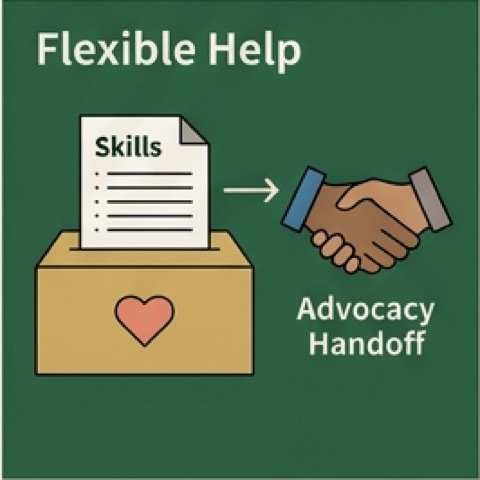
The most useful flexible offer is concrete. Instead of saying you can help with anything, offer a defined action: collect winter coats for one official drive, translate one flyer if the organization wants it, make one pickup, or help with one spreadsheet.
- Name the task, timeline, and handoff.
- Ask what format the organization prefers.
- Keep the offer easy to accept or decline.
Skilled help should not become surprise labor
Web, design, legal, finance, HR, data, translation, grant, and operations help can be valuable, but nonprofits need control over scope and timing. A small defined project is usually better than a vague offer.
- Offer one scoped project.
- Name your availability and deadline.
- Ask what system or format the organization already uses.
Do not create work while trying to help
A generous idea can become extra staff work if it ignores the organization's actual process. For drives, outreach, photos, guest posts, or corporate group days, confirm the need first and make the plan easy for the host to manage.
- Use official wish lists before collecting items.
- Avoid surprise drop-offs.
- Ask before publishing photos, stories, or calls for help.